
There is a moment, somewhere over the eastern Mediterranean, when the cabin lights dim and the captain mentions that you are about to begin descent into Cairo. The flight from Istanbul has taken just over two hours. You finished a meal, watched part of a film, and somehow crossed from one of the great cities of Europe and Asia into one of the great cities of Africa.
Few luxury travel routes in the world feel quite this generous. Two civilisations, two ancient capitals, two of the most photogenic cities on earth — connected by a flight shorter than the drive from Istanbul to Cappadocia. And yet, despite the geography, the Istanbul-to-Cairo combination remains surprisingly underbooked. Travellers visit each city alone, separated by years. The two-country journey, properly designed, is something else entirely.
After arranging hundreds of these journeys, we have learned that pairing Istanbul and Cairo is not simply a matter of booking two trips back to back. It requires understanding what each city is for, how they speak to each other, and where most travellers go wrong. Here is how it is actually done.

Why Istanbul and Cairo Belong on the Same Itinerary
Most multi-country trips force a contrast — the cathedrals of Europe with the temples of Asia, say. Istanbul and Cairo are not contrasts. They are sisters. Both were imperial capitals of empires that stretched across continents. Both sit on water that defined their character — the Bosphorus and the Nile. Both have a layered history where Byzantine meets Islamic, ancient meets modern, sacred meets profane in the same street.
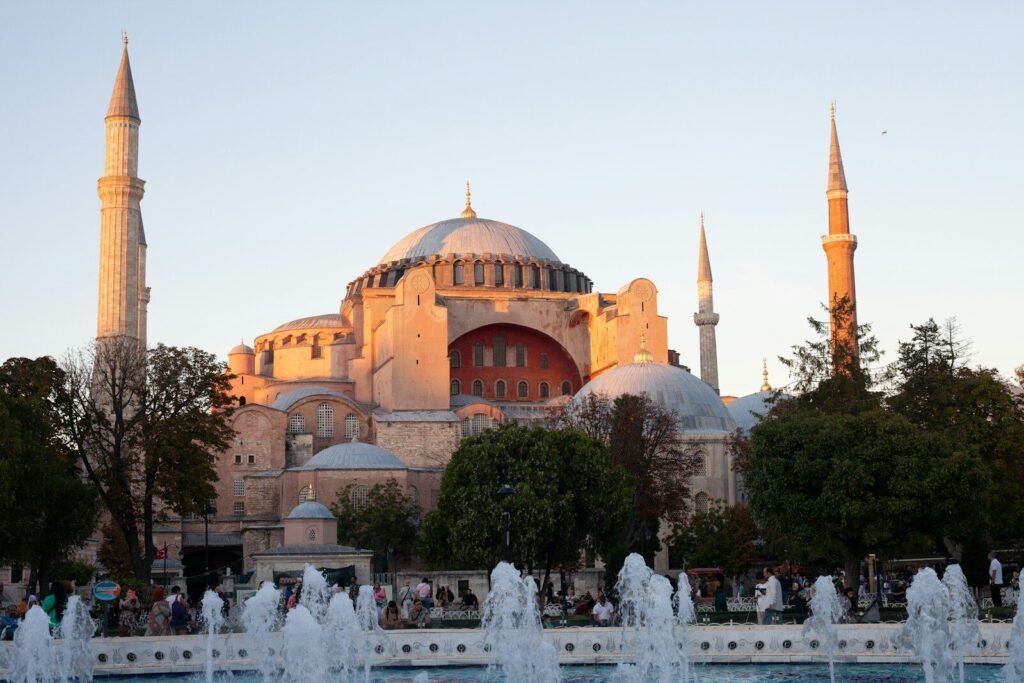
Standing inside Hagia Sophia and standing inside Sultan Hassan Mosque are not opposite experiences. They are the same conversation, continued. Walking the Grand Bazaar in Istanbul and Khan el-Khalili in Cairo is not visiting two markets — it is tracing one trade network across six centuries.
This is why the journey works as a single trip rather than two. The traveller who does Istanbul this year and Cairo three years from now sees them as separate. The traveller who does them in one journey sees how they belong to each other.
The Practical Geography
The flight is shorter than most people realise: two hours and twenty minutes, direct, with five to six daily departures between Istanbul Airport (IST) and Cairo International Airport (CAI). Both Turkish Airlines and EgyptAir operate the route, with morning and evening departures that fit a multi-stop itinerary cleanly.
Cairo is one hour behind Istanbul (UTC+2 vs UTC+3). The time difference is small enough that jet lag is not a factor — your body simply continues the trip without protest.
Visa logistics are straightforward for most nationalities. Turkey offers e-visas (or visa-free entry, depending on passport) and Egypt offers visa-on-arrival or e-visa. For luxury travellers, both can be handled in advance and arrive ready in your inbox before you board.
This is the under-appreciated truth: Istanbul to Cairo is logistically simpler than Istanbul to Cappadocia plus Pamukkale plus Ephesus. The two-country journey is, by some measures, less complicated than a deep single-country tour.

The Right Length: 9 to 12 Days
The single most common mistake we see is travellers compressing this trip into a week. It does not work — not because the cities cannot be sampled in seven days, but because the combination needs room to breathe.
The honest itinerary maths:
- Istanbul rewards a minimum of four nights. Less than that, and you are checking off Hagia Sophia and Topkapı without ever feeling the city. The Bosphorus, Beyoğlu, the islands, the local restaurants — these reveal themselves on day three and four.
- Cairo rewards a minimum of four nights. Day one is the Pyramids and Sphinx. Day two is the Grand Egyptian Museum (newly opened and now genuinely the most important museum on earth). Day three is Old Cairo, Khan el-Khalili, and the Citadel. Day four is the breathing day — a felucca on the Nile, a long lunch, a private viewing somewhere quieter.
- Travel day between them. Even a 2.5-hour flight consumes most of a day with airport time, transfers, and arrival logistics.
This adds up to a minimum of nine nights. Twelve nights — five Istanbul, six Cairo, one travel — is the sweet spot most of our guests settle into.
If your time is shorter, the question becomes: which city is the heart of this trip? Pick that one and give it the room. The other can be added next year.
The Sequencing Question: Which City First?
This matters more than most travellers think. We almost always recommend Istanbul first, then Cairo — for three specific reasons.
Energy curve. Cairo is the more intense city — louder, denser, more sensorially demanding. Starting in Istanbul lets you arrive in Cairo with traveller-momentum already built. The reverse — landing in Cairo on day one of an international trip — overwhelms many travellers and they spend their first 48 hours adjusting rather than seeing.
Climate logic. Most luxury travellers visit between October and April. In that window, both cities are pleasant, but Cairo’s spring (March-April) and autumn (October-November) are particularly generous. Istanbul-then-Cairo lets you move toward warmer weather as the trip progresses — psychologically the right direction.
Historical chronology. Istanbul tells a story that runs from Byzantine through Ottoman to modern Turkey. Cairo tells a story that runs from Pharaonic through Islamic through colonial and modern Egypt. Visiting them in this order means moving from the more recent imperial layer (Ottoman) backward into the deeper one (Pharaonic). The narrative builds rather than reverses.
The exception: if your trip is timed around a specific Cairo event — the new Grand Egyptian Museum’s seasonal exhibitions, a Nile cruise window — Cairo first is fine. The default, however, holds.
What Each City Is Actually For
Travellers who arrive without a clear sense of what each city does tend to over-program both. Here is the framing we use.
Istanbul is for layering. It rewards travellers who want to move slowly between civilisations within a single day — Byzantine in the morning, Ottoman by lunch, contemporary art by evening, a fish meyhane by night. The city’s pleasure is in the depth of any one street, not in checking off ten neighbourhoods.
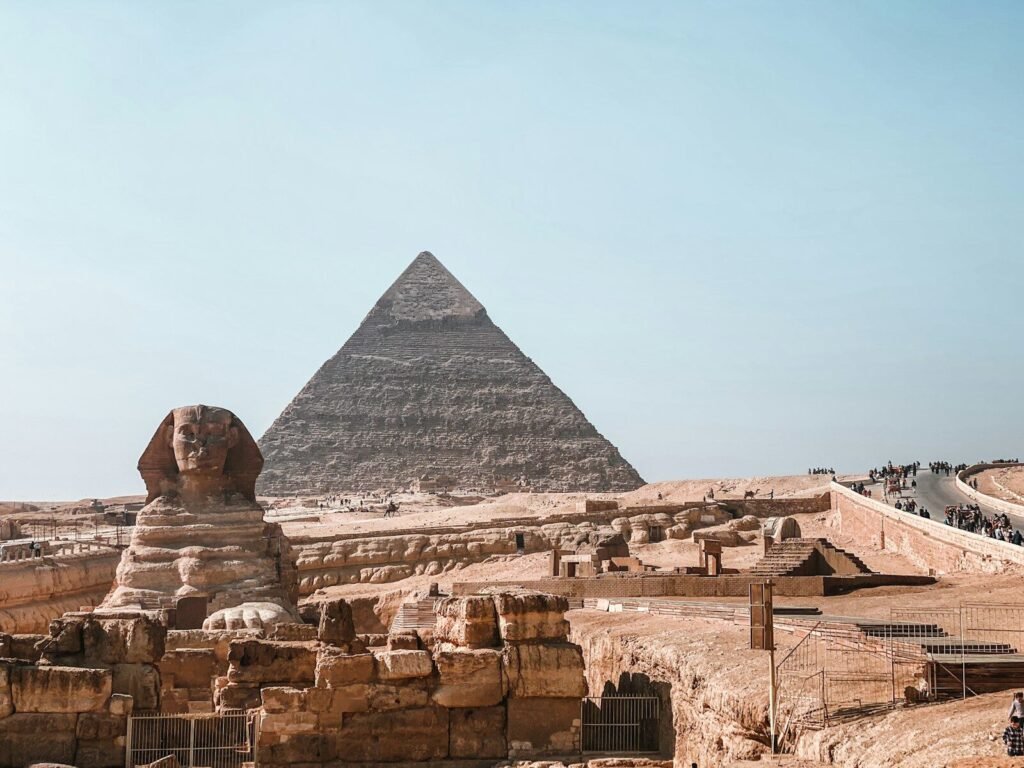
Cairo is for awe. It is a city that delivers experiences few others can — standing 15 metres from the Great Pyramid, watching Tutankhamun’s full collection assembled in one room for the first time in a century, sailing the Nile at sunset on a private felucca. Cairo’s gift is scale. The right itinerary protects the moments where that scale lands.
Istanbul is the conversation. Cairo is the silence. Both matter. Both belong on the same trip.
What Most Travellers Get Wrong
After years of designing this combination, the recurring missteps are surprisingly consistent.
Trying to add Cappadocia and Luxor. It is tempting — both are famous, both are worth seeing. But adding two more regions turns a 12-day trip into 18 days, and few travellers have that. The disciplined version of this journey is two cities, properly. The expanded version (with Cappadocia and Luxor) is its own trip, usually 16-20 days, and best treated separately.
Booking the flight at the wrong time. A 6am Istanbul departure means leaving the hotel at 4am, which costs you the previous evening too. A 9pm Cairo arrival means hitting the Cairo traffic at the worst possible hour. Mid-morning departures from Istanbul and afternoon arrivals in Cairo work best — and these flights book out first.
Underestimating Cairo logistics. Cairo traffic is its own ecosystem. A trip from Giza to Old Cairo that looks like 25 minutes on a map can take 90 minutes in afternoon traffic. The right itinerary is built around traffic patterns, not just distances. Most travellers do not realise this until day two, when they have already lost three hours to it.
Not pre-booking the Grand Egyptian Museum. Since its full opening, capacity is managed and walk-ups are increasingly difficult during peak windows. Tickets and timed entry slots need to be secured in advance. Add a private Egyptologist and the experience transforms — but again, that requires lead time.
A Sample Itinerary (12 Nights)
This is the shape of the most common trip we design for guests new to both countries. It is meant as a frame, not a prescription — every itinerary we build is shaped around the specific traveller.
Days 1–2: Istanbul (arrival and the old city)
Arrival, hammam in a 16th-century bathhouse, a slow first dinner. Day two: a private morning at Hagia Sophia before opening, the Blue Mosque, Topkapı Palace, lunch in Sultanahmet, an afternoon Bosphorus crossing.
Day 3: Istanbul (Beyoğlu and beyond)
Galata, İstiklal, contemporary art at Istanbul Modern, a long lunch in Karaköy. Evening: rooftop drinks with a Bosphorus view, fish meyhane dinner.
Day 4: Istanbul (the islands or the Asian side)
A day off from monuments. Either the Princes’ Islands by ferry, or Kadıköy and Üsküdar on the Asian side — bazaar, food walk, tea garden.
Day 5: Istanbul (the slow morning) and travel to Cairo
Late breakfast, last shopping in the Grand Bazaar, midday flight, evening arrival in Cairo, a quiet first dinner at the hotel.
Days 6–7: Cairo (Pyramids and the Museum)
Day six: the Pyramids of Giza and Sphinx with a private Egyptologist, sunset at a quiet vantage, dinner with a pyramid view. Day seven: the Grand Egyptian Museum, ideally a half-day with a curator-led private tour, lunch in Zamalek.
Day 8: Cairo (Old Cairo and Islamic Cairo)
Coptic Cairo in the morning, the Citadel and Sultan Hassan Mosque around midday, Khan el-Khalili in the afternoon, sunset on a Nile felucca.
Day 9: Cairo (the breathing day)
A late start. A private gallery or studio visit. A long lunch. An afternoon at a desert lodge or a Nile-side garden. Dinner at one of Cairo’s quieter restaurants.
Days 10–12: Optional extension
Three nights in Luxor for a deeper Egypt arc, or a Red Sea finish at El Gouna, or a return to Istanbul for two final nights of slow city living. Each of these turns the trip into something different.
Day 13: Departure.

The Lupin Approach
We have been arranging Istanbul-Cairo journeys long enough to know that the difference between a memorable trip and a great one usually lives in the unscripted moments — the conversation with a Cairo gallerist that ends with a private studio visit the next day, the Istanbul fishmonger who teaches your children to clean a sea bass, the early-morning Pyramid visit before the gates open to the public.
These cannot be booked from a brochure. They emerge from itineraries built around who you actually are, by people who know both cities deeply enough to recognise when the right door is the one that is not on the map.
If you are considering Istanbul and Cairo for the same journey — for the first time, or as a return to either after years away — the most useful conversation is not about the itinerary. It is about why now, and what you want this trip to leave behind.
The rest, we can build.
Considering a private journey from Istanbul to Cairo? Get in touch with our team — every two-country itinerary we design begins with a conversation about you, not a map.