
There is a particular kind of honeymoon that arrives in Cappadocia. They land at Kayseri or Nevşehir Airport with one shared mental image — the one with the balloons — and an itinerary built mostly around photographing it. They have not slept properly in three days. They are slightly overwhelmed. They have a 4am wake-up call for the next morning.
We have hosted enough of these arrivals to know the shape they take. The honeymoons that work — the ones that couples remember properly, the ones whose photographs hold up five anniversaries later — are not the ones that did the most. They are the ones that protected the right moments and let the rest go.
This is, in the most useful way we can write it, what a honeymoon in Cappadocia actually requires. Where to stay, what to do, and — perhaps more important — what to leave out.
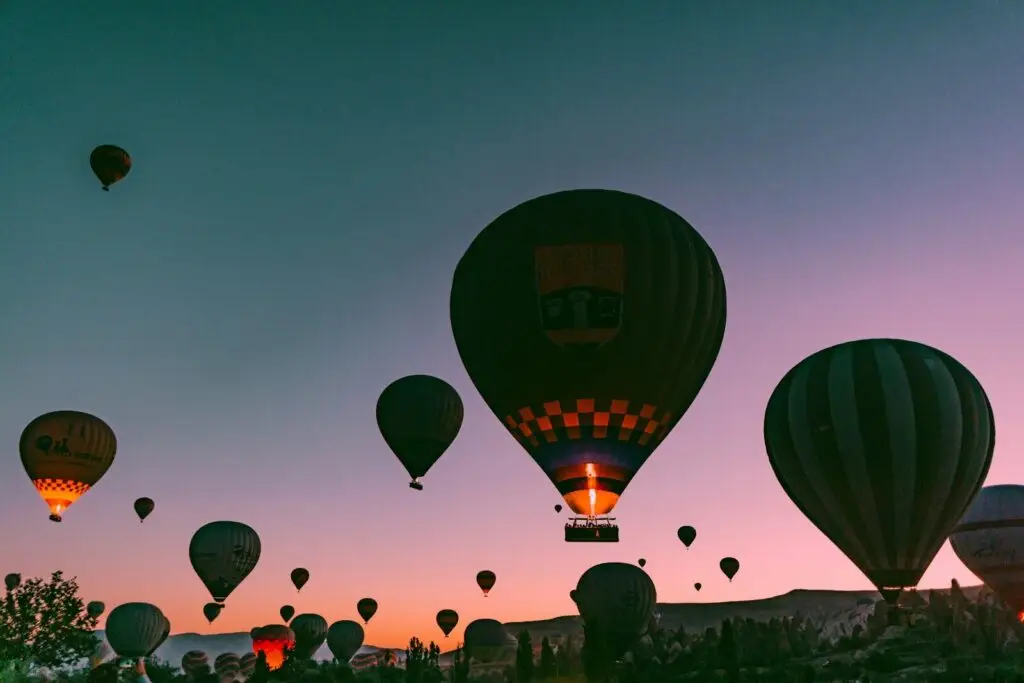
The Three Hotels That Honeymoon Properly
Cappadocia has hundreds of cave hotels. Most are charming. A handful are honeymoon-grade. The difference is not just star rating — it is whether the hotel was built for couples who want privacy, view, and stillness, or whether it was built for tour groups passing through.
After years of placing honeymooners across the region, three properties earn most of our recommendations.
Argos in Cappadocia is, for many travel designers, the honeymoon answer in Cappadocia. A Relais & Châteaux property in the village of Uçhisar, built into the ruins of a centuries-old monastery, with its own vineyard and an underground wine cellar. The Splendid Suites have private terraces overlooking Pigeon Valley with Mount Erciyes on the horizon. The hotel’s Seki restaurant works with ingredients sourced within a 60km radius. This is the choice for couples who want serious hospitality, valley silence, and a property that disappears into the landscape rather than showing off.
Museum Hotel is the more theatrical choice. Also in Uçhisar, built into restored cliff dwellings, with antiques placed throughout the rooms — actual museum-grade antiques, in bedrooms. The Lil’a restaurant overlooks the valley, and the heated outdoor pool is photogenic in a way few hotel pools are. Honeymooners who want their stay to feel like an event, not a retreat, often choose this one.
Kayakapi Premium Caves sits in Ürgüp rather than Uçhisar — a slightly different feel, more village-integrated, with the hotel built into a historic neighbourhood the family has been restoring for two decades. The cave suites range up to 253 square meters, several with private pools and hammams. The Revithia restaurant on site holds a Michelin Star — the only one in Cappadocia. For couples who want their hotel to also be a destination, this is the strongest option.
Each of these has a different personality. Argos is for couples who want depth and discretion. Museum Hotel is for couples who want their honeymoon to feel cinematic. Kayakapi is for couples who want both luxury and a credible food scene under the same roof.
What none of them are: the photogenic Sultan Cave Suites terrace that everyone has seen on Instagram. That terrace is a public hotel rooftop, and the honeymoon photos taken there are taken in queues. The properties above protect their guests’ mornings.
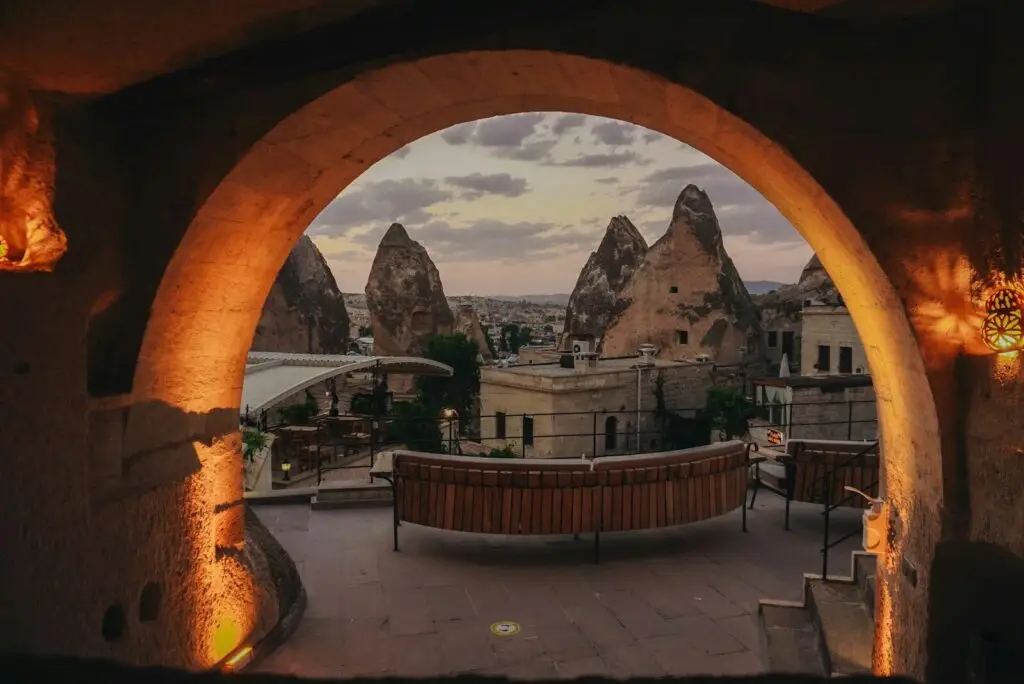
The Balloon — Done Properly
Almost every honeymoon in Cappadocia includes the balloon flight. It deserves to. What also deserves attention: the difference between a generic balloon experience and the one that becomes the memory.
Book a private basket, not a shared one. A standard balloon carries 16-20 passengers in shared compartments. The honeymoon version carries 4 to 8, in some cases 2. The price difference is real (3-4x). The experience difference is enormous — a private basket means quiet, no jostling for photo angles, and a pilot who can adjust the flight path to your interests rather than the group’s.
Choose your operator carefully. Cappadocia has dozens of balloon companies. Three or four operate at honeymoon standards: Royal Balloon, Butterfly Balloons, and Voyager Balloons consistently deliver the experience the price implies. The cheapest options are not the ones to take here.
The flight itself is 60-75 minutes. What turns it into a honeymoon moment is the pre-dawn drive (the colour shift over the valleys before sunrise is, frankly, more romantic than the flight), the champagne breakfast at landing (real ones, not “champagne” in inverted commas), and the quiet morning that follows. We always block the morning after — no scheduled tours, no transfers. Just back to the hotel terrace.
Plan for cancellation. Roughly 30-40% of flights are cancelled for wind, even in peak season. Couples who plan three nights in Cappadocia have one chance at the balloon. Couples who plan four nights have three. The single biggest predictor of whether a honeymoon includes the balloon is how many mornings the itinerary protects for it. Plan four nights. Always.
What to Actually Do in Cappadocia (Beyond the Balloon)
The balloon is one morning. The other 70-something hours of a four-night honeymoon need their own shape. Here is what we plan around.
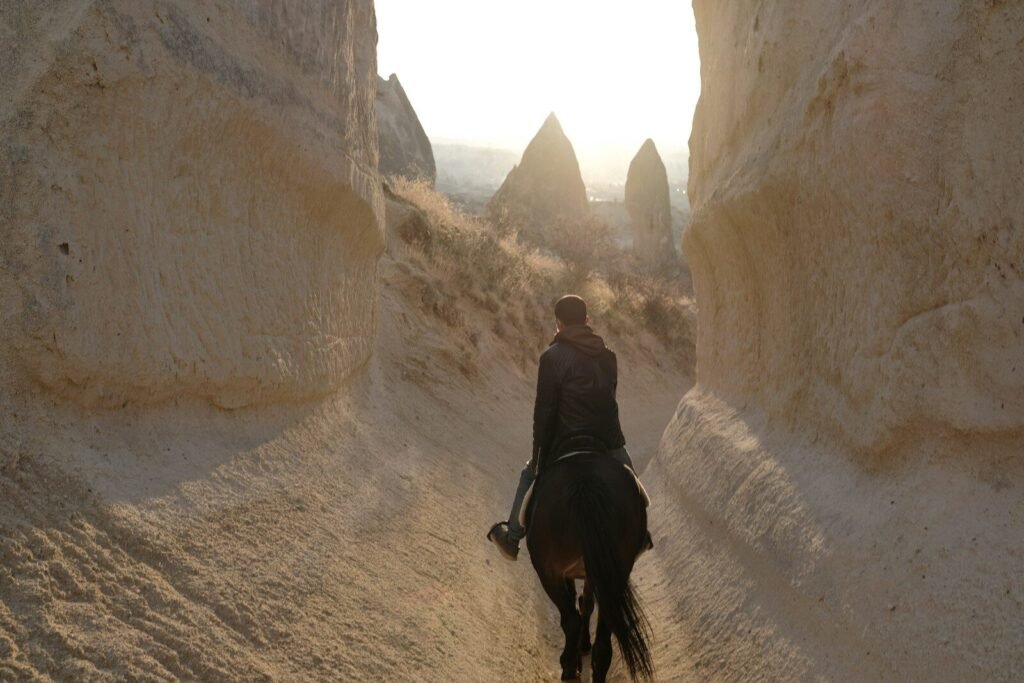
A horseback ride at golden hour through the Red Valley or Rose Valley. Cappadocia means “land of beautiful horses” in old Persian, and a private guided ride at sunset, ending at a quiet vantage with a small picnic, is one of the most underrated honeymoon experiences in the country. Better than any restaurant.
A private wine tasting at a Cappadocia vineyard. The region has a 4,000-year-old wine tradition that almost no foreign visitor experiences. Turasan, Kocabağ, and the smaller Vinkara estate offer tastings that, with the right introduction, can become afternoon-long lunches in a vineyard.
A pottery lesson in Avanos. The town has been making pottery from the red Kızılırmak clay for 4,000 years. A two-hour private class at one of the family workshops — Chez Galip is the most photogenic, but the smaller ateliers are quieter — is messy, surprisingly intimate, and produces something you take home.
A long lunch at a vineyard or rooftop with no schedule afterwards. Most itineraries pack four activities into a day. The honeymoon itinerary should pack two, with hours between them. Lunches that last three hours are the ones couples remember.
What to Skip
This is the part most honeymoon guides avoid. We will not.
Skip the Whirling Dervish performances marketed at tourists. They exist, they are scheduled, and they are almost always a poor representation of the spiritual ceremony they imitate. If the dervishes interest you, the real ceremony — Sema — happens in Konya at specific times of year and requires its own trip. The Cappadocia tourist version is forgettable at best, awkward at worst.
Skip the underground city day-tours done in groups. Kaymaklı and Derinkuyu are remarkable, but a 40-person tour bus group descending into a 2nd-century chamber is the wrong way to experience them. If they fascinate you, do them privately, early in the morning, before the bus tours arrive — or do not do them at all.
Skip the “Turkish Night” cave-restaurant dinners with belly dancers. These exist mostly to occupy the evenings of bus-tour groups. They are not where local Cappadocians eat. The food is mediocre. The ambience is theatrical. Honeymoons deserve better.
Skip the four-valleys-in-one-day group tours. Cappadocia is meant to be experienced slowly. The driver-guide racing through Devrent, Paşabağ, Göreme Open-Air Museum and Avanos in a single afternoon delivers, at best, a checklist. The honeymoon version chooses one valley, walks it for two hours with a local guide, and stops for tea at someone’s house.
Skip ATV tours. They exist. They are loud. They scar the valleys. They are not honeymoon material — and increasingly, the local protected-area regulations are catching up with them anyway.
The Right Length
Three nights is the minimum. Four nights is the right length. Five nights is generous.
Three nights, properly designed: arrival evening, first balloon attempt, valley walk and lunch, second balloon attempt if needed, departure morning.
Four nights opens room for the things that make a honeymoon a honeymoon: the unscheduled afternoon, the long vineyard lunch, the second sunrise on the hotel terrace where you have not been awake at 4am the night before. Four nights also dramatically increases the probability that you actually get to fly.
Five nights is for couples extending into the surrounding region — Soğanlı, Ihlara Valley, or pairing with two nights in Istanbul before or after. This is closer to a 7-9 night Turkey honeymoon than a Cappadocia-only trip.
When to Come
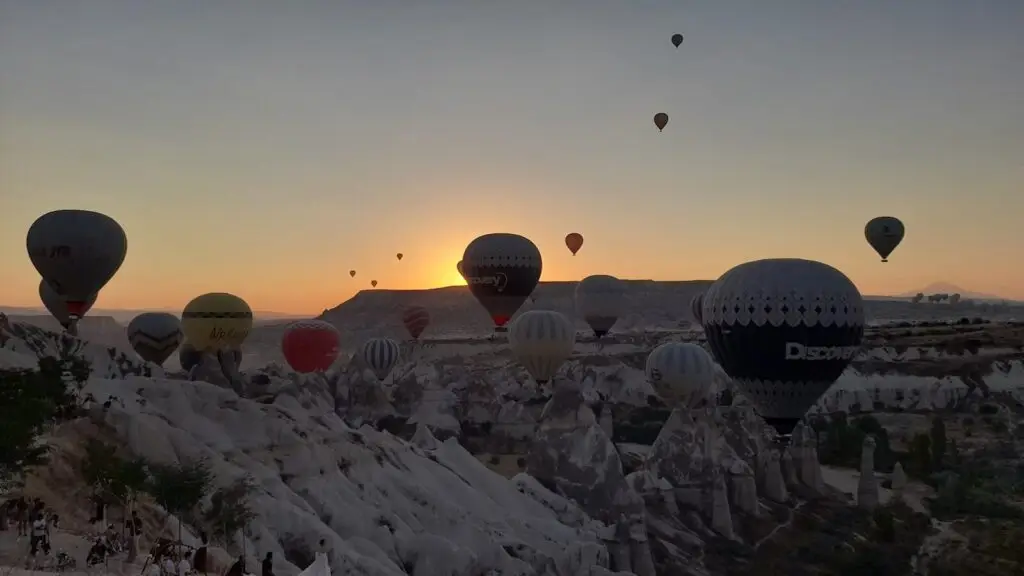
The honeymoon-grade months in Cappadocia are late April through May, and late September through October.
April-May: wildflowers across the valleys, mild temperatures, balloon flight success rate at its annual peak, vineyards green, hotels at full operation. The single best window for a Cappadocia honeymoon.
September-October: the sweet spot most travel designers prefer. Warm days, cool nights, clear skies, fewer crowds than midsummer, prices easing from peak. October is golden — literally and otherwise.
What to avoid: July and August daytime heat (35°C+ in the valleys, no shade), February-March wind cancellations (balloon flights frequently grounded), and Christmas-New Year if you want valley walks rather than fireplace evenings.
The Lupin Approach to a Cappadocia Honeymoon
We design Cappadocia honeymoons for couples who understand that the trip they remember will not be the most photographed one — it will be the most felt one.
That means a hotel chosen for who you actually are, a balloon morning planned with three contingencies, a guide who knows where the quiet vantages are, a long lunch that ends without a transfer, and an itinerary with at least one full afternoon written into it as nothing.
If you are planning a Cappadocia honeymoon — for next month or next year, alone or as part of a longer Turkey arc — the conversation we want to have first is not about which valleys to see. It is about what you want this week to mean afterwards.
The rest, we can build.
Considering a Cappadocia honeymoon? Get in touch with our team — every honeymoon we design starts with a conversation about you, not a checklist.